

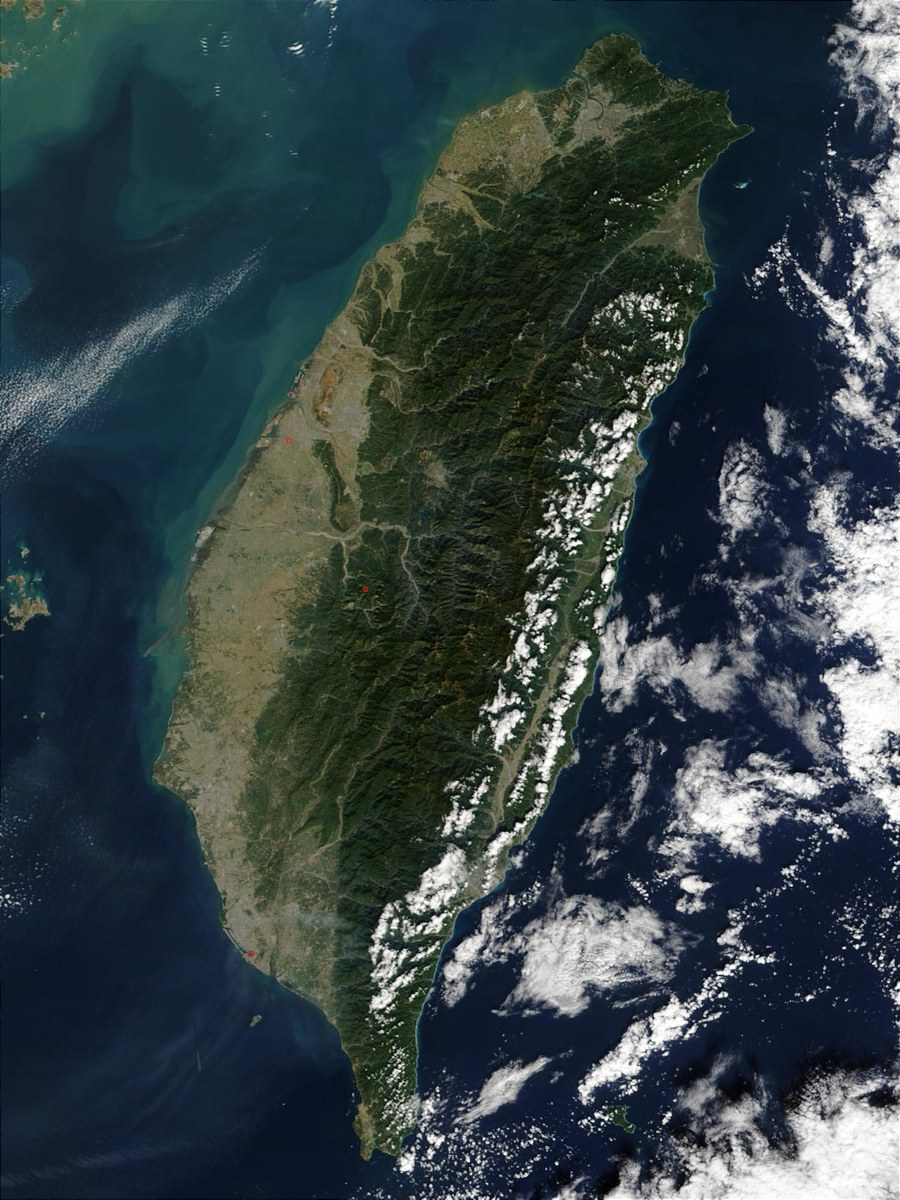
Every smartphone, every AI data centre and every modern weapons system runs on chips. The most advanced of them come from one island of 23 million people. Taiwan's TSMC makes over 90% of the world's most advanced semiconductors (Klingler-Vidra, 2026). That single fact is why capitals from Washington to New Delhi watch the Taiwan Strait so closely.
For years, strategists have taken comfort in the idea of a "silicon shield": the world needs Taiwan's chips too much to let Taiwan fall. It is a reassuring theory. It is also a dangerous one, because a shield is passive. It works only if others decide to defend it.
The window is closing
Beijing treats Taiwan as a breakaway province and has never renounced force. Since 2022 it has run a string of large military drills around the island, including Justice Mission 2025 in December 2025, which rehearsed a blockade (USNI News, 2025; Reed et al., 2026). China's defence budget is roughly $275 billion; Taiwan's is about $31 billion (The Star, 2026; Free Malaysia Today, 2025). American resolve, once taken for granted, now looks ambiguous.
Meanwhile the shield itself is thinning. The United States, Japan and others are building advanced fabs on their own soil. That is sensible supply-chain policy, but every fab built abroad makes the world a little less dependent on Taiwan, and Taiwan a little less protected. The very uniqueness that gives Taiwan leverage is being diluted.
Standing on Broken Nest
The idea of threatening to destroy TSMC's fabs is not new, and this article does not claim it is. It was set out in 2021 by Jared McKinney and Peter Harris in "Broken Nest: Deterring China from Invading Taiwan", published in the US Army War College journal Parameters. They argued that Taiwan should become "unwantable" to Beijing, so that an invasion would bring an economic crisis instead of a prize (McKinney & Harris, 2021). The paper drew wide attention and sharp criticism, and McKinney (2024) has since defended it.
The Chip Deterrence Doctrine accepts that core logic and asks what is missing. A threat aimed only at Beijing leaves Taiwan's friends as bystanders. The doctrine adds two things. The first is a chips-for-security bargain that gives partners a direct stake in Taiwan's survival. The second is an Indian dimension: India is a rising chip economy that would feel a Strait crisis directly, yet its role is seldom discussed in this debate. The sections below set out the three pillars, answer the main objections to Broken Nest, and then turn to India.
What the Chip Deterrence Doctrine says
The doctrine turns a passive asset into an active deterrent, through three pillars.
First, make the threat credible. Following McKinney and Harris (2021), Taiwan should state plainly that if China invades, TSMC's advanced fabs will be destroyed before they can be captured. These plants depend on delicate tools, materials, engineers and power, so they cannot simply be seized and switched on. The message to Beijing is that conquest does not deliver the prize. China would lose its own supply of advanced chips for AI and military use, and the world would lose them for years. Invasion destroys the thing you want. McKinney (2024) argues that Taiwan and its Dutch equipment supplier now appear to be signalling a softer version of the same idea, through reports that the most advanced lithography machines could be disabled remotely.
Second, build asymmetric defence. Deterrence needs real capability behind it. Taiwan should invest in AI-enabled drones and undersea sensors across the Strait, which play to its own technological strengths and can be fielded far faster and more cheaply than a conventional navy. In cyberspace it should build on what it already has. Taiwan set up the Information, Communications and Electronic Force Command (ICEFCOM) in 2017, bringing communications, cyber and electronic warfare units under one authority, with about six thousand personnel (Weber, 2022). Rather than create a new unit, the doctrine argues for expanding ICEFCOM and hardening it for the worst case, so that it can protect the fabs' systems and keep working even if undersea cables are cut, a risk McKinney (2024) flags.
Third, trade chips for security. Countries that publicly back Taiwan, such as Japan, India and Australia, should get priority access to its best chips. Economic interdependence then becomes political protection. The bargain runs both ways: partners gain supply security in a crisis, and Taiwan gains friends who would lose something real if it fell. This pillar, together with the Indian angle below, is what this article adds to Broken Nest.
The hard questions
Critics will say that destroying fabs would devastate Taiwan's own economy. It would, and that is the point: a threat so costly should never need to be carried out, and it applies only if the fabs would otherwise fall to an occupier. The sharper objection is credibility. A threat means nothing if Taiwan would never act on it, so the doctrine demands real contingency planning, clear legal authority and political consensus at home.
Two further objections deserve a direct answer, because they are the strongest made against Broken Nest.
The first is that China wanted Taiwan long before TSMC existed, and would want it even if TSMC had never existed (Turton, 2022). That is true, but it misreads the doctrine. Beijing's motive is political and historical, and the doctrine does not try to change it. It tries to change the calculation. McKinney (2024) points out that China has wanted unification for decades yet has not invaded, because the costs have outweighed the benefits, and Taiwan's chip industry is now part of that balance. If Beijing believes an invasion would capture a working chip industry, the benefits rise; if it believes it would capture wreckage, they fall. Deterrence works at the margin, which is why this article treats it as one pillar among three rather than a cure.
The second is that destroying the fabs might only delay China until it can make its own advanced chips. This is a real limit. Turton (2022) warns that wrecking the plants could push China to rebuild them at home, and McKinney (2024) accepts that pressure on China in peacetime encourages it to find substitutes, which softens the shock of losing Taiwan's chips over time. But the gap is still large. One 2026 assessment finds that China's logic chip manufacturing remains three to five years behind TSMC and is held back by limited access to advanced lithography tools (CEIAS, 2026). A delay of that length matters, because the years up to 2030 are the dangerous ones. The doctrine does not promise permanent safety. It buys time, and uses that time to build defences and partnerships so that deterrence does not rest on the fabs alone.
Allies who rely on Taiwan's chips may also be uneasy, which is why the third pillar must be negotiated with partners rather than imposed on them.
Why India should care
India's stake is no longer theoretical. More than 200 Taiwanese firms operate in India, with roughly $4.5 billion invested and 170,000 jobs created (ANZ Institutional, 2024), and the Tata–PSMC chip fab in Gujarat ties the two economies together. A crisis in the Strait would hit India through trade, energy and technology.
India's own chip plans raise the stakes further. The Tata–PSMC fab in Dholera is built on a technology transfer agreement with a Taiwanese chipmaker (Business Standard, 2024), so India's first large fab already depends on Taiwanese know-how. A war in the Strait would endanger that expertise as well as the chips themselves.
The chips-for-security pillar gives India a concrete reason and a concrete route to act. India can offer Taiwan a large market, growing electronics manufacturing capacity and engineering talent, in return for priority access to advanced chips in a crisis. It can do this without formal diplomatic recognition, through trade, technology and people-to-people links, which is how the relationship works today. New Delhi should deepen and formalise its economic and technology partnership with Taipei, use the Gujarat fab as strategic leverage, and help build a multilateral semiconductor security framework with the United States, Japan and Australia. Together with India, these are the four members of the Quad, which gives such a framework an existing diplomatic home.
An honest answer
The next few years, up to 2030, may be the most dangerous Taiwan has faced. The Chip Deterrence Doctrine is not a perfect answer, but it is an honest one. It builds on Broken Nest, answers its critics where it can, and concedes where they have a point. Taiwan's greatest strength cannot protect it unless Taiwan is willing to make that strength credible.