

For decades, the security of the Gulf rested heavily on the United States. American bases, naval deployments, intelligence cooperation and arms partnerships helped reassure Gulf governments that a powerful external partner stood behind them. But recent conflicts and attacks on critical infrastructure have exposed the limits of relying too heavily on any one outside power. Across the region, leaders are asking a difficult question: can Gulf security remain dependent on external guarantees, or must the countries of the region take greater responsibility for their own future?
A defence pact in a changing region
The Gulf's reliance on American protection has deep roots, particularly since the 1990–91 Gulf War. However, the 2019 attacks on Saudi Aramco facilities and subsequent regional escalations highlighted how exposed energy infrastructure, shipping and commercial routes can be. Even a powerful military partnership cannot eliminate every risk, especially when drones, missiles and asymmetric tactics can threaten assets far from conventional front lines.
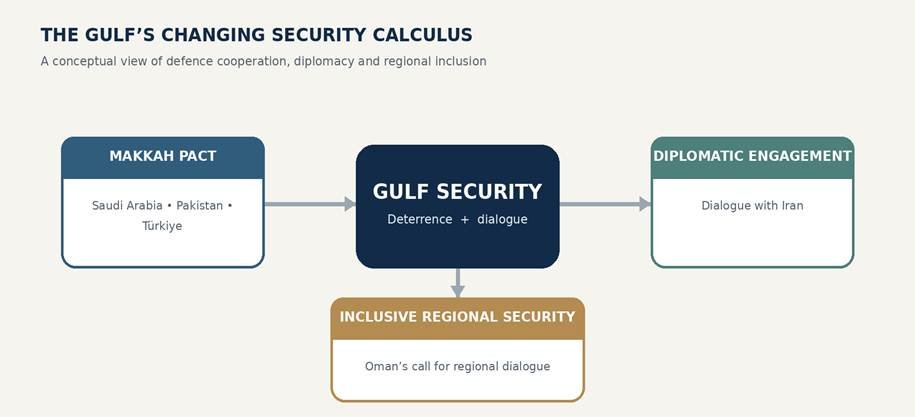
Against this background, the Makkah Pact brings together three countries with different but complementary strengths. Saudi Arabia has considerable financial and diplomatic influence; Pakistan brings a large and experienced military; and Türkiye has an expanding defence industry and significant regional capabilities. The arrangement offers its members another layer of cooperation and may strengthen their ability to coordinate on defence and regional crises.
It would be premature, however, to describe the pact as a replacement for the United States or as an established alternative security umbrella. Its long-term importance will depend on how its commitments are implemented, how its members manage differences and whether military cooperation develops into a wider political understanding.
The Tehran meeting: a significant signal
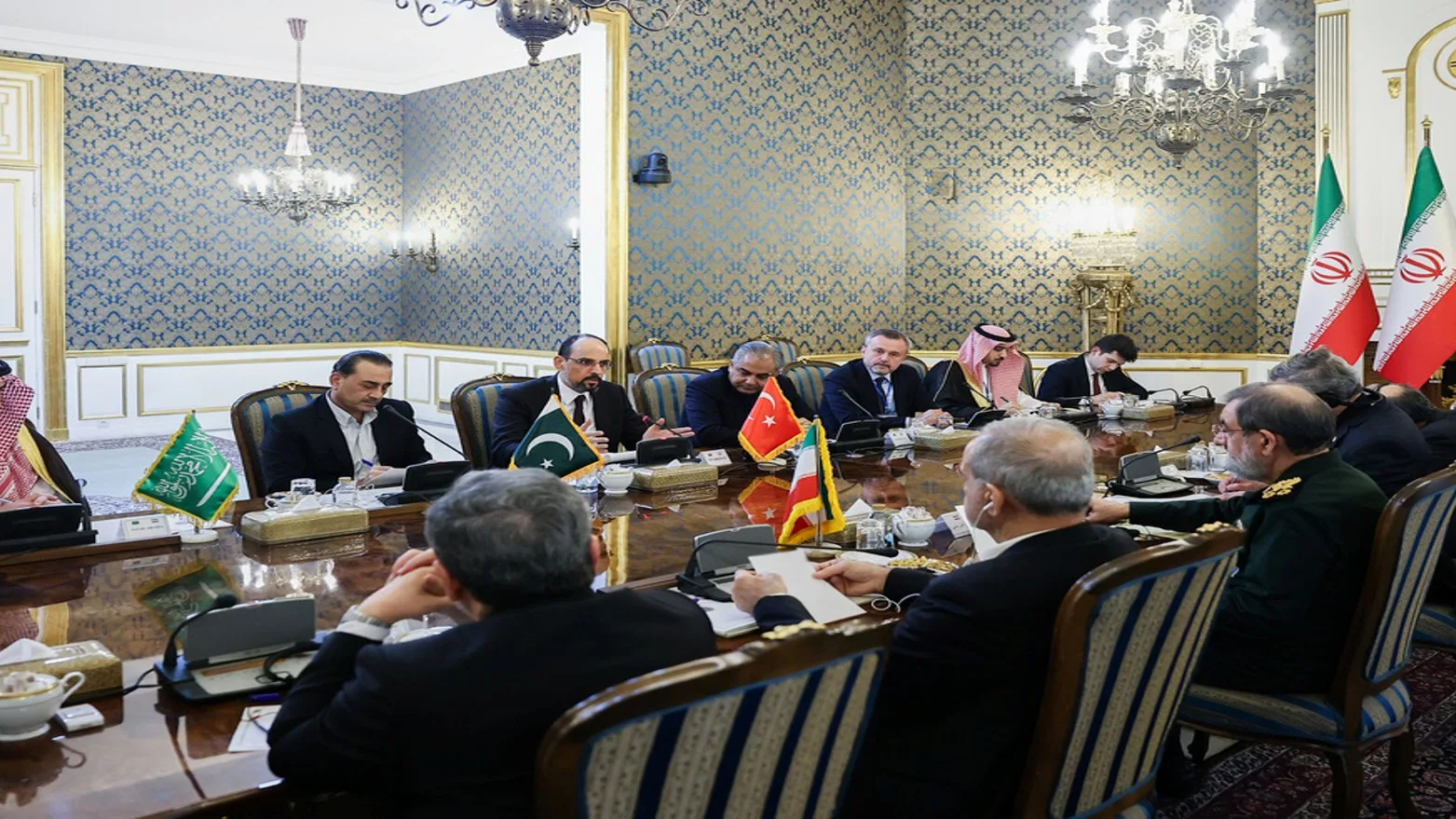
The meeting in Tehran on 26 October 2026 brought the changing mood into sharper focus. Senior representatives from Saudi Arabia, Pakistan and Türkiye met Iranian officials to discuss regional security and wider developments in West Asia. Saudi Arabia was represented by Defence Minister Prince Khalid bin Salman, Pakistan by Army Chief Field Marshal Asim Munir, and Türkiye by intelligence chief Ibrahim Kalin. Iranian President Masoud Pezeshkian and Foreign Minister Abbas Araghchi also took part in the discussions.
The meeting did not, by itself, create a new regional security agreement. Its significance was political: countries cooperating through a new defence arrangement were prepared to speak directly with a state often portrayed as a principal source of regional insecurity. That is an important distinction. Dialogue does not erase disagreements, nor does it mean that Saudi Arabia or its partners have abandoned their concerns about Iran's regional policies. It does show that they see communication with Tehran as necessary to managing those concerns.
In a region where miscalculation can quickly affect energy supplies, maritime traffic and civilian lives, keeping channels open is not a concession. It is a practical form of risk management.
Pakistan's message: the door is not closed
The comments made by Pakistan's military spokesperson, Lieutenant General Ahmed Sharif Chaudhry, on 30 October added another layer to the story. In an interview with Reuters, he described Pakistan as “cautiously optimistic” about its efforts to facilitate de-escalation between Iran and the United States. He pointed to Field Marshal Asim Munir's two visits to Tehran during October as an indication that there may be some room for progress, while warning that spoilers could undermine the process.
Chaudhry was also asked whether Iran could eventually join the Makkah defence arrangement. He said the wording of the pact did not bar new members, while making clear that any such decision would rest with the political leadership of the countries involved. His remarks should not be read as an invitation already extended to Iran. They do, however, suggest that the arrangement is not necessarily designed as a permanently closed anti-Iran bloc.
Pakistan's position is particularly delicate. It has close defence ties with Saudi Arabia, shares a border with Iran and has an interest in preventing a wider conflict on its doorstep. By maintaining contact with both sides, Islamabad is seeking to act as a bridge rather than force a choice between partners.
Oman's argument: security must include Iran
The clearest call for a more inclusive regional approach came from Oman's Foreign Minister, Sayyid Badr Albusaidi. In his 26 October lecture, “Inclusive Security in the Gulf,” delivered at Girton College, University of Cambridge, he argued that the six Gulf Cooperation Council states should work with both Iran and Iraq on a shared regional framework.
Albusaidi's central point was straightforward: a Gulf security system that leaves Iran outside it is inherently unstable. He argued that Iran's exclusion from regional security arrangements had carried deeply negative consequences and called on the countries of the region to take greater collective responsibility for their own security. His proposal included renewed regional dialogue and the possibility of a non-aggression understanding among the eight states.
Oman's position reflects its long-standing preference for dialogue and its role as an interlocutor between governments that do not always trust one another. Albusaidi was not arguing that Gulf states should ignore their security concerns or abandon partnerships with external powers. Rather, he was making the case that outside powers should not remain the primary architects of Gulf security, and that regional states must have a stronger voice in shaping their own arrangements.
From deterrence to managed coexistence
These developments are best understood as two tracks operating at the same time. The Makkah Pact is about cooperation and deterrence among its members. The Tehran meeting, Pakistan's mediation efforts and Oman's proposal are about reducing the risk of confrontation and creating channels through which disputes can be managed. The two tracks are not necessarily contradictory. In fact, credible defence capabilities can sometimes give governments greater confidence to pursue diplomacy.
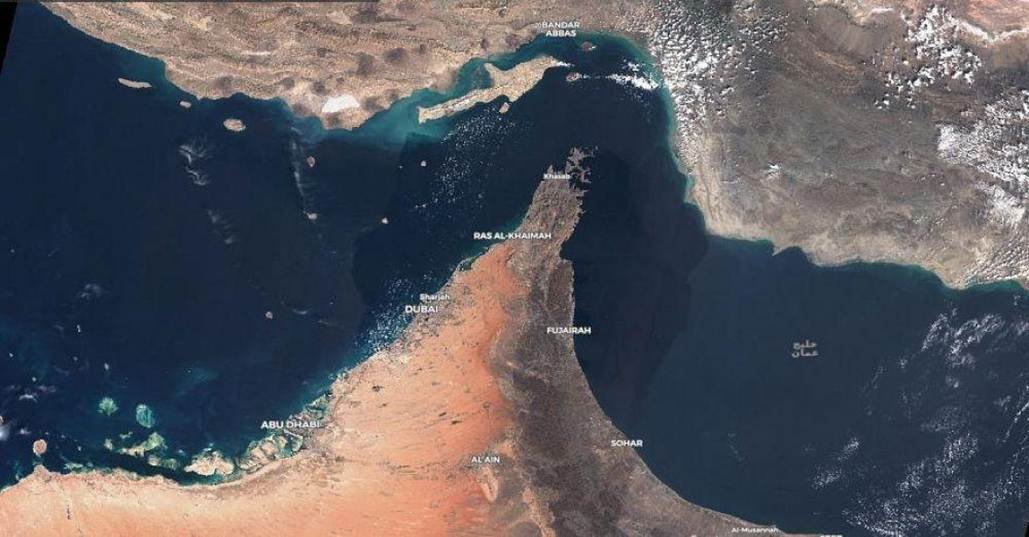
For Gulf countries, the practical stakes are high. Their economies depend on secure sea lanes, predictable energy exports, foreign investment and ambitious plans to diversify beyond hydrocarbons. A prolonged confrontation involving Iran could threaten shipping through the Strait of Hormuz, raise insurance and transport costs, unsettle markets and undermine economic transformation programmes. Even governments that distrust Tehran have strong reasons to prevent an avoidable escalation.
At the same time, there are real obstacles to an inclusive framework. Gulf states and Iran disagree over regional influence, armed groups, missile capabilities and maritime security. Trust cannot be created through a single meeting or speech. Any lasting arrangement would need transparency, sustained dialogue, crisis-communication mechanisms and practical steps to reduce the risk of miscalculation.
Conclusion: a Gulf security order shaped from within
The recent developments do not show that the Gulf is transferring its security dependence from Washington to Tehran. They point instead to a more nuanced shift: regional governments are seeking greater strategic autonomy while recognising that Iran cannot simply be removed from the security equation. The United States will remain an important actor, and the Makkah Pact may deepen defence cooperation among its members. But neither military partnerships nor external guarantees can, on their own, produce a stable regional order.
The Tehran meeting of 26 October, Pakistan's military spokesperson's remarks on 30 October and Albusaidi's call for an inclusive eight-country framework all point towards a wider conversation about who should shape Gulf security. Whether that conversation produces concrete agreements remains uncertain. Still, the direction of the debate is significant.
The Gulf may not be moving towards Iran as a new security guarantor. It is, however, increasingly confronting a basic strategic reality: a durable security architecture for the region will have to find a way to include Iran in the conversation, even when serious disagreements remain.